Septic tank pumping in Saint Paul runs $150 to $300 for a standard day-rate service call, based on 4 measured jobs, with weekend service landing between $50 and $150 extra depending on scope. Tank size, access, and how long since the last pump-out all move the number, and that is the core of most septic tank cleaning price questions homeowners ask before booking. A typical 1,000 gallon tank needs attention every 3 to 5 years.
A day-rate septic pump-out in Saint Paul falls between $150 and $300, and that range covers most single-family homes with a standard 1,000 gallon tank. Weekend or after-hours calls run $50 to $150 as an add-on, not a replacement rate, so budget accordingly if your tank backs up on a Saturday. The exact number depends on how deep the tank sits, whether the lid needs digging out, and how long it has been since septic tank cleaning last happened. Homes on well-maintained systems with easy riser access land at the low end. Homes where the crew has to locate and dig up a buried lid, or where solids have built up past a normal service interval, push toward the top of that range. If you are budgeting for a first-time pump or comparing septic tank cleaning prices, Septic Tank Pumping Cost in Saint Paul, MN is the page to start from, and our septic pumping service page covers what a standard visit includes. For anyone still deciding between pumping now or waiting, How Often To Pump a Septic Tank in Saint Paul, MN walks through the 3 to 5 year interval in more detail.
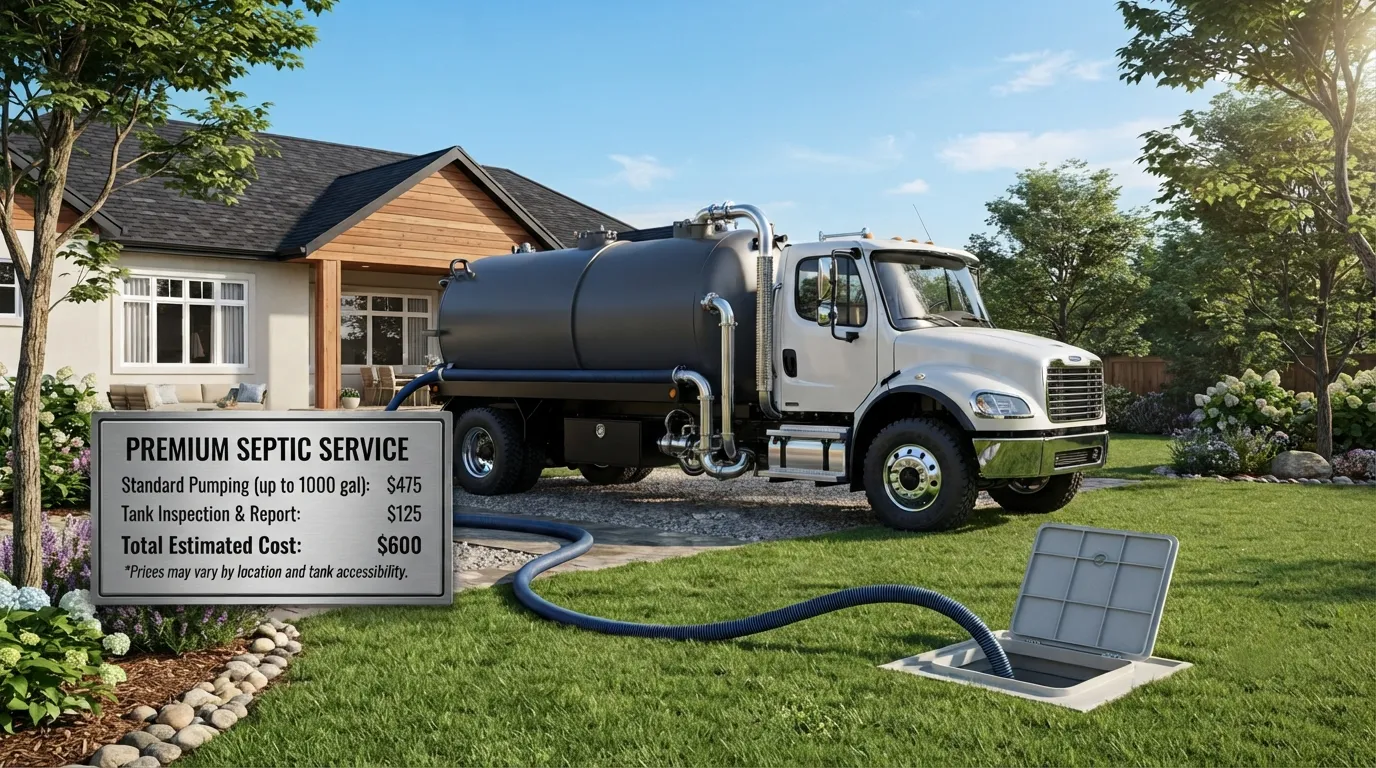
Tank size is the biggest factor. A 1,000 gallon tank costs less to pump than a 1,500 gallon tank simply because there is more to remove. Access matters almost as much: a tank with a visible riser and lid takes minutes to open, while a buried lid under landscaping or a deck adds labor time that shows up on the invoice. Distance also plays a role for outlying properties. A crew driving out to a home near West St. Paul, 4.3 miles south or toward Eagan, 11.4 miles south factors travel into the quote, though most Saint Paul addresses fall well within a standard service radius. Homes that have gone past the typical 3 to 5 year window often have more solids built up, which can mean a longer pump time and a higher price than a tank on a routine schedule. If warning signs like slow drains or wet spots in the yard show up before your scheduled pump, check Septic Tank Warning Signs in Saint Paul, MN before assuming it is just routine maintenance.
Yes. The average cost of septic tank pumping tracks tank size closely: a 1,000 gallon tank is the most common residential size and sits at the lower end of the local pricing band, while larger tanks or tanks serving bigger households cost more simply due to volume. A 1000 gallon septic tank pumping cost usually falls at the low-to-mid point of the day-rate range shown above, assuming easy access. Household size drives how often pumping is needed in the first place: a 1,000 gallon septic tank is typically pumped every 3 to 5 years, and that interval shortens for larger families or homes running a garbage disposal heavily. Commercial properties with grease interceptors follow a different rule entirely. A grease interceptor gets pumped once fats, oils, grease and solids reach 25 percent of the liquid depth, which is a volume-based trigger rather than a calendar one. Restaurants and food service operations in Saint Paul should look at Grease Trap Pumping in Saint Paul, MN separately from residential septic service, since the schedule and pricing logic differ.
| service | duration | low | typical | high |
|---|---|---|---|---|
| septic pumping | day | $150 | $250 | $300 |
| septic pumping | weekend add-on | $50 | $100 | $150 |
Because digging takes time, and time is what you pay for on a service call. A tank with an exposed riser lets a technician open it, run the hose, and finish the job quickly. A buried lid means someone has to locate it, often by probing the yard, then dig it out before the actual pumping even starts. That extra labor is the single most common reason two homes with the same size tank get different septic tank cleaning costs on an otherwise identical job. Property owners who plan ahead by installing a riser, or who at least mark the lid location, tend to pay less over the life of the system. This matters just as much for larger properties managing construction runoff or temporary facilities, where Construction Site Services in Saint Paul, MN often pairs septic work with other site needs like Roll-Off Dumpster Rental in Saint Paul, MN or Temporary Fence Rental in Saint Paul, MN during a renovation.
Yes, they solve different problems, even though the same company often handles both. Septic pumping empties and services a fixed, in-ground tank connected to a home's plumbing. Portable restroom rental provides a standalone toilet, typically with a 60 to 70 gallon holding tank, for job sites, events, or properties without working plumbing. If your Saint Paul property needs temporary facilities during a septic repair or system replacement, an Emergency Porta Potty Rental in Saint Paul, MN bridges that gap. Construction crews on-site already juggling sanitation needs should also check OSHA Portable Toilet Requirements in Saint Paul, MN, since OSHA 1926.51(c) sets toilet facility ratios for job sites separate from any septic question. Homeowners doing a renovation that disrupts bathroom access often rent a Home Renovation Porta Potty in Saint Paul, MN for the duration of the work rather than relying on a single working toilet.
Saint Paul homeowners searching for septic tank pumping near me usually want a straightforward number before they call, and that is the goal here. Pricing in Saint Paul lines up with the ranges above, and a property with easy access and a routine 3 to 5 year schedule will land toward the lower end almost every time.
A standard day-rate pump-out costs $150 to $300 in Saint Paul, with the 1,000 gallon tank size most common for single-family homes. Weekend service adds $50 to $150 on top of that. Actual cost depends on tank access and how long since the last service.
A typical 1,000 gallon residential tank needs pumping every 3 to 5 years, driven by tank size and household size. Larger households or heavy disposal use can shorten that interval. Waiting too long risks solids buildup that raises the eventual service cost.
Buried tank lids, larger tank sizes, and long gaps since the last service all push cost higher. A tank with an accessible riser costs less to service than one requiring digging. Distance for outlying properties can also factor into the final price.
No. Grease interceptors are pumped when fats, oils, grease and solids reach 25 percent of liquid depth, a volume trigger rather than a fixed schedule. Residential septic tanks follow a 3 to 5 year calendar-based interval instead. Commercial kitchens need both tracked separately.
Yes, weekend and after-hours septic service is available in Saint Paul, typically priced as an add-on to the standard day rate. Emergency calls happen when a tank backs up unexpectedly. Contact Emergency Septic Service in Saint Paul, MN for options outside a normal service window.
Yes. Saint Paul Porta Pros delivers septic tank pumping cost across Saint Paul and the surrounding metro, with same-day and next-day drop-off available on most orders.
Pricing depends on the unit and how long you need it. See our cost breakdown and request a free quote for an exact figure.
Standard rentals include scheduled service — a pump-out, a clean, a restock and fresh deodorizer. Busy or hot-weather sites can be serviced more often.
Call now or request a free quote — clean units, on-time delivery, transparent pricing.